Wellness
Never meditated before? Here's your beginner's guide to starting a practice in Bristol
From Stokes Croft to Clifton, the city's wellness scene makes it easier than ever to sit still — if you know where to look.
4 min read
Wellness
From Stokes Croft to Clifton, the city's wellness scene makes it easier than ever to sit still — if you know where to look.
4 min read

More Bristolians are trying meditation for the first time in 2026, and many of them are doing it wrong — or not doing it at all after the first week. The drop-off rate for new practitioners is steep. Research published in the journal Mindfulness found that roughly 58 percent of people who begin a solo meditation habit abandon it within a month, most citing confusion about technique rather than lack of time. The good news: Bristol has a genuinely useful infrastructure for beginners who want more than an app.
The timing matters. Wider conversations about stress, hormonal health, and the psychological cost of financial pressure — mortgage rates, job uncertainty, the creeping sense that ambition and fulfilment have come uncoupled — have pushed mental wellness back to the top of the public agenda this summer. General practitioners at practices including Easton Family Centre on Thrissell Street are increasingly signposting patients toward structured mindfulness courses as a first-line recommendation before prescribing medication for mild anxiety.
Two organisations stand out for absolute beginners. Bristol Buddhist Centre on Colston Street runs an eight-week introductory course called "Mindfulness for Everyday Life" — the next cohort begins 14 September 2026, costs £180 (with a subsidised rate of £90 available on request), and caps enrolment at 16 people per group, which keeps it genuinely interactive rather than lecture-style. The centre has been running courses in some form since 1984, so the methodology is well-worn. Sessions run on Tuesday evenings from 7pm.
On the other side of the city, Heartspace Bristol in Bedminster operates drop-in meditation classes every Wednesday lunchtime at 12:30pm for £8 per session. No booking required, no prior experience assumed. For people who find a fixed eight-week commitment daunting, the drop-in format removes the psychological barrier of "falling behind." The venue on East Street is a fifteen-minute cycle from the centre along the Malago Greenway, which matters in Bristol, where cycling to wellness activities is half the ritual.
For those who prefer to begin at home, the NHS-endorsed Mindfulness-Based Cognitive Therapy (MBCT) programme — accessible via the NHS Talking Therapies service, which covers the Bristol, North Somerset and South Gloucestershire area — is free at the point of use. Referrals can be self-made at any point by calling 0800 953 0304. The structured eight-week MBCT model, developed at Oxford University in the 1990s by Zindel Segal and colleagues, has the strongest clinical evidence base of any secular mindfulness programme and is specifically designed for people with no prior experience.
Beginners consistently overestimate how long they need to sit. Five minutes of focused attention on the breath, done daily, produces measurable changes in self-reported stress within three weeks, according to a 2024 meta-analysis covering 36 randomised controlled trials and more than 2,700 participants. The science here is unambiguous enough that the NHS has incorporated mindfulness into its Long Term Plan targets for mental health service delivery.
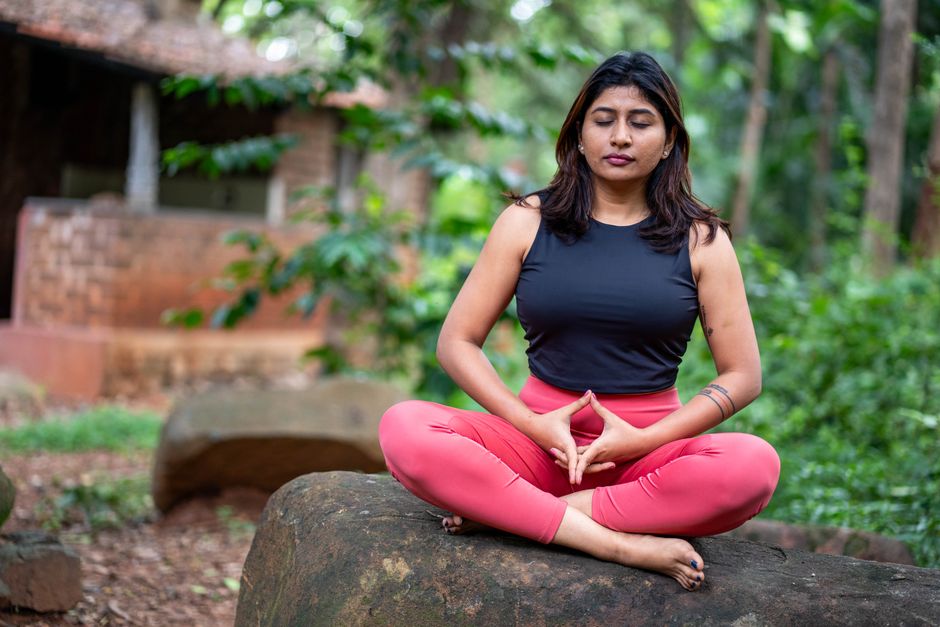
Start seated on a chair with your feet flat on the floor — not cross-legged on a cushion, unless that's genuinely comfortable. Set a timer for five minutes. Focus on the physical sensation of breathing at the nostrils or chest. When your attention wanders, which it will every twenty seconds or so at first, return it without self-criticism. That act of returning is the practice. You are not failing when your mind wanders. You are training when you notice it has.
Weeks three and four are the danger zone. The initial novelty fades, results feel invisible, and skipping a session becomes easy to justify. This is precisely the moment to book into a group setting. The Wednesday drop-in at Heartspace Bedminster costs £32 for the month if you attend every week — considerably less than a single session with a private therapist, and for many people more sustainable. Bristol's density of green space also helps: Ashton Court, a ten-minute drive from Bedminster, offers a free alternative for outdoor walking meditation, a practice that carries the same attentional benefits as seated work for many beginners. Consult your GP if you have a history of trauma before beginning any intensive mindfulness programme, as some individuals find certain techniques require professional guidance at the outset.
About this article
Published by The Daily Bristol
Spread the word
Daily brief
Free, in your inbox before 7am. Weekdays.
The Daily Network — local news across Australia